

Commentary: Big Tent Ideas
MARSHAL TRIGG: It Is Time To End Race-Based Districting For Good
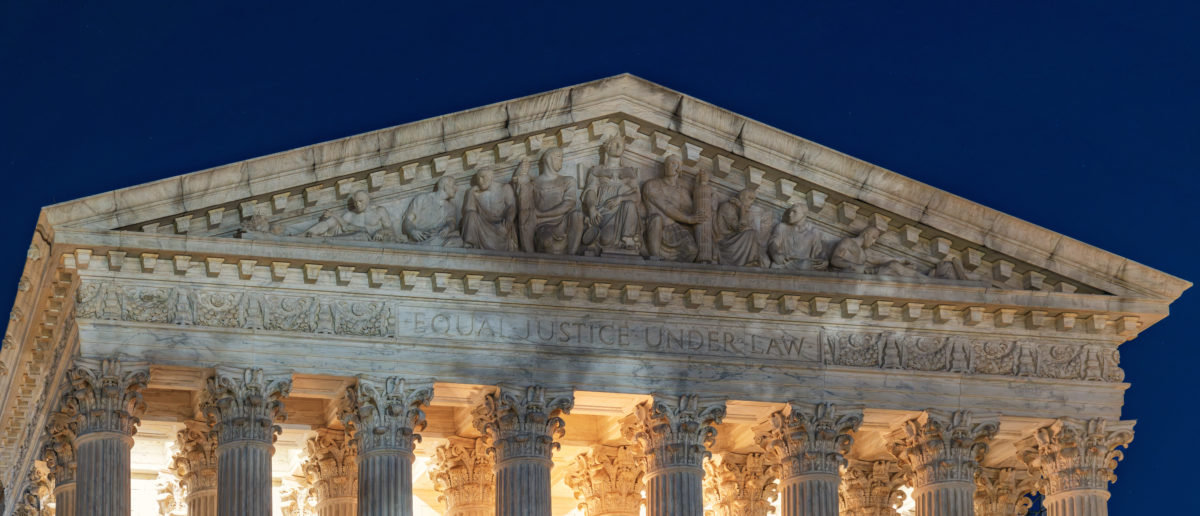
Tony Webster/Wikimedia Commons
The Supreme Court has heard Louisiana v. Callais, a case that could reshape American redistricting and perhaps end the era of race-based district lines altogether. The question before the court is simple: does the Constitution allow states to use racial quotas to draw their district maps?
Under the current voting rights regime, states lurch between competing hazards of liability. Don’t consider race enough and you violate the Voting Rights Act. Consider race too much and you run afoul of the Fourteenth Amendment’s equal protection guarantees. Case in point: Louisiana was halted from enacting a plan with two majority black districts and then slapped down again for doing just that.
The Voting Rights Act of 1965 was a historic success. Congress enacted the law to wipe out blatant barriers restricting the ability of black Americans to vote, particularly in the South. Within two years, black registration rates jumped from 6.7 to 59.8% in Mississippi. In Alabama, it rose from 19.3% to 51.6%. By 1967, every covered state had achieved over 50% black voter registration.
Section 2 of the Voting Rights Act was originally aimed at intentional discrimination—laws that deliberately restricted the right to vote. In 1982, Congress rewrote it to include “discriminatory results,” allowing lawsuits based on racial disparities determined under a loose “totality of circumstances” test.
Four years later, the Supreme Court applied that new language in Thornburg v. Gingles. The case wasn’t about access to the ballot but instead turned on the racial makeup of legislative districts. Gingles turned the Voting Rights Act from a civil-rights guarantee into a racial balancing act.
The nine-factor Gingles framework is sprawling, subjective, and ripe for abuse. Its application tells the story:
- In Louisiana, the “subliminal message” of a sheriff’s office sharing a floor with the registrar’s office supposedly proved a history of socioeconomic discrimination.
- In Georgia, voter ID and proof-of-citizenship requirements constituted “official discrimination in the state” sufficient to compel the creation of additional majority-minority districts—even where 98% of eligible voters were registered, both major-party nominees in the last Senate race were black, and black Georgians already enjoyed proportional representation in Congress.
- In Mississippi, disparities attributed to “the nature of black poverty” were treated as proof of vote dilution.
- In Alabama, a federal court even speculated whether Ben Carson’s defeat in the 2016 Republican primary showed “racially polarized voting.”
Inevitably, Gingles has turned courts into instruments of social engineering. But it isn’t up to the federal judiciary to craft and implement its own grand political theories about representation. The Voting Rights Act provides no metric for the “right” number of black or Hispanic districts a state must draw. And the Constitution “abhors” race-based classifications, to borrow a line from Justice Thomas.
The Supreme Court’s task in Callais is not to fine-tune this contradiction but to end it. The Fourteenth Amendment demands color-blind districting: lines drawn according to neutral criteria like population, compactness, and political boundaries. Subordinating these principles to a racial headcount demeans us all. The framers of the Reconstruction Amendments did not envision a political order in which judges and line drawers tally voters by race to manufacture balance. They promised equality before the law, and an end to the caste logic that divided Americans by ancestry. It is time to get back on track.
Marshal Trigg is a Junior Counsel for Restoring Integrity and Trust in Elections (RITE) and a Daily Caller Election Law Contributor.
The views and opinions expressed in this commentary are those of the author and do not reflect the official position of the Daily Caller News Foundation.
(Featured Image Media Credit: Tony Webster/Wikimedia Commons)
All content created by the Daily Caller News Foundation, an independent and nonpartisan newswire service, is available without charge to any legitimate news publisher that can provide a large audience. All republished articles must include our logo, our reporter’s byline and their DCNF affiliation. For any questions about our guidelines or partnering with us, please contact [email protected].