

US
SCOTUS Appears Skeptical Of Colorado Law Forcing Counselors To Agree With Kids’ Gender Confusion
Sunira Moses/Creative Commons/Flickr
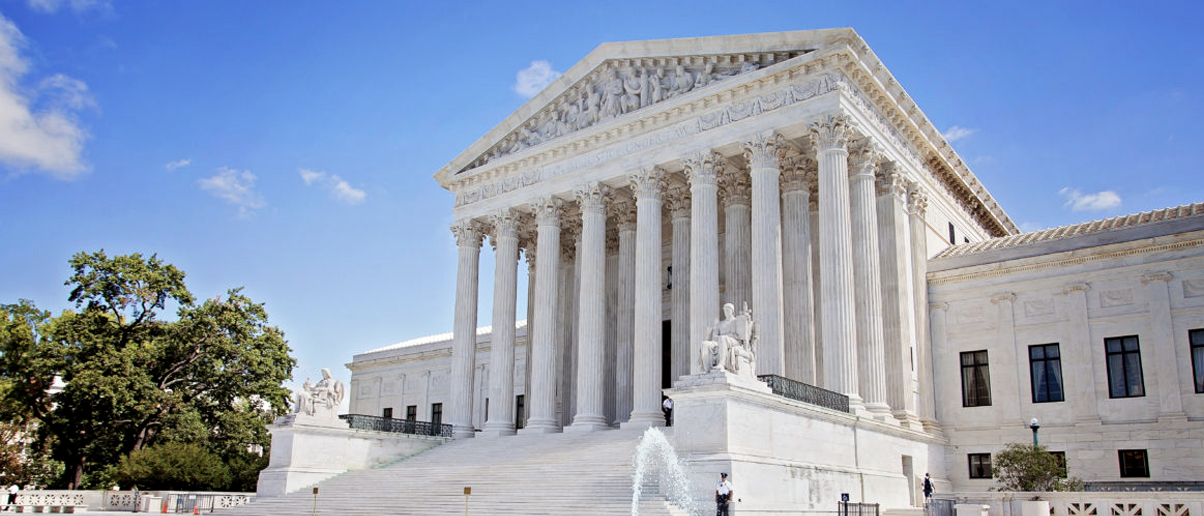
WASHINGTON — The Supreme Court appeared inclined Tuesday to side with a Christian counselor who brought a First Amendment challenge to Colorado’s ban on “conversion therapy.”
Several justices seemed concerned that Colorado’s law was “viewpoint discrimination” against counselors like the petitioner, Kaley Chiles, who aims to help minors feel comfortable in their body rather than agreeing with their gender dysphoria.
Colorado’s Minor Conversion Therapy Law (MCTL), passed in 2019, defines “conversion therapy” as efforts to “change an individual’s sexual orientation or gender identity,” including behaviors, gender expressions and romantic attractions. Nearly half of all U.S. states have similar bans on “conversion therapy.”
Chiles is being silenced “daily” by the law, which effectively forbids counselors from helping minors pursue “state-disfavored goals on gender and sexuality,” Alliance Defending Freedom Chief Legal Counsel James Campbell told the justices.
“One of the things that’s so problematic about Colorado’s law is that it undermines the well-being of kids that are struggling with gender dysphoria,” Campbell said. “Colorado accepts that up to 90% of kids who struggle with that before puberty will work their way through it and realign their identity with their sex.”
In the past several weeks, Chiles has faced anonymous complaints alleging violation of the law, though the state now claims it does not intend to enforce the statute against her.
“The court seemed very receptive to the points we were making,” Campbell told reporters outside the court. “The court gave many, many indications that it was bothered by the law.”
Colorado Attorney General Phil Weiser told reporters a First Amendment exception to its “conversion therapy” ban could be “dangerous.”
“[Conversion therapy is] telling young people that who they are is not ok, leaving lasting harm,” he said. “This type of pressure or coersion has been discredited by all medical associations.”
Kaley Chiles speaks after SCOTUS hears her case.
“Colorado’s law hurts kids struggling with gender dysphoria most of all. If counselors wish to engage clients on these issues, the law limits them to one option of encouraging kids to reject their body. That is a tragedy.” pic.twitter.com/GGRT0nXziP
— Katelynn Richardson (@katesrichardson) October 7, 2025
Colorado claims “conversion therapy” is “unsafe and ineffective.” Department of Justice Principal Deputy Solicitor General Hashim Mooppan emphasized that there is “no evidence” for Colorado’s claim.
“This is an easy case because there is no conduct,” Mooppan said. “All that is happening here is speech.”
Colorado Solicitor General Shannon Stevenson, however, emphasized that “conversion therapy” should be considered conduct, not speech.
“This has been an area that has been heavily regulated from the beginning of our country, and no one has ever suggested that a doctor has a First Amendment defense to say the wrong advice to their patient,” she said.
Justice Neil Gorsuch noted that homosexuality was “professionally considered to be a mental health disorder” in the 1970s. Stevenson agreed that a state, at the time, could have passed a law banning talk therapy that affirmed homosexuality, if that was the standard of care.
Anonymous complaints have been filed against Kaley Chiles in recent weeks alleging violations of Colorado’s “conversion therapy” ban, @ADFLegal Chief Legal Counsel Jim Campbell tells @DailyCaller News Foundation.
“Rather than dismiss those complaints, the state of Colorado has… pic.twitter.com/9untcZBZbg
— Katelynn Richardson (@katesrichardson) October 7, 2025
When justices posed the scenario of a state passing the inverse of Colorado’s law — a ban on talk therapy that agrees with a child’s gender identity — Stevenson struggled to explain how this would not infringe on free speech protections.
Justice Amy Coney Barrett asked if states can just “pick a side” in a scenario where there is medical uncertainty.
“It’s not that the medical community says, ‘We just don’t know,” Barrett said. “It’s that there are competing strands. Some states, like say, Tennessee, which was the state at issue in Skrmetti, pick one side, Colorado picks another side.”
Stevenson repeatedly emphasized it is the “standard of care” that matters. She later conceded that true medical uncertainty would “raise more significant questions.”
“The harms from conversion therapy come from when you tell a young person, ‘You can change this innate thing about yourself,'” Stevenson said. “And they try and they try, and they fail, and they have shame, and they’re miserable, and it ruins their relationships with their family.”
All content created by the Daily Caller News Foundation, an independent and nonpartisan newswire service, is available without charge to any legitimate news publisher that can provide a large audience. All republished articles must include our logo, our reporter’s byline and their DCNF affiliation. For any questions about our guidelines or partnering with us, please contact [email protected].