

Commentary: Big Tent Ideas
DAVID BLACKMON: Trump Can’t Be Blamed For All Of Offshore Wind’s U.S. Failings
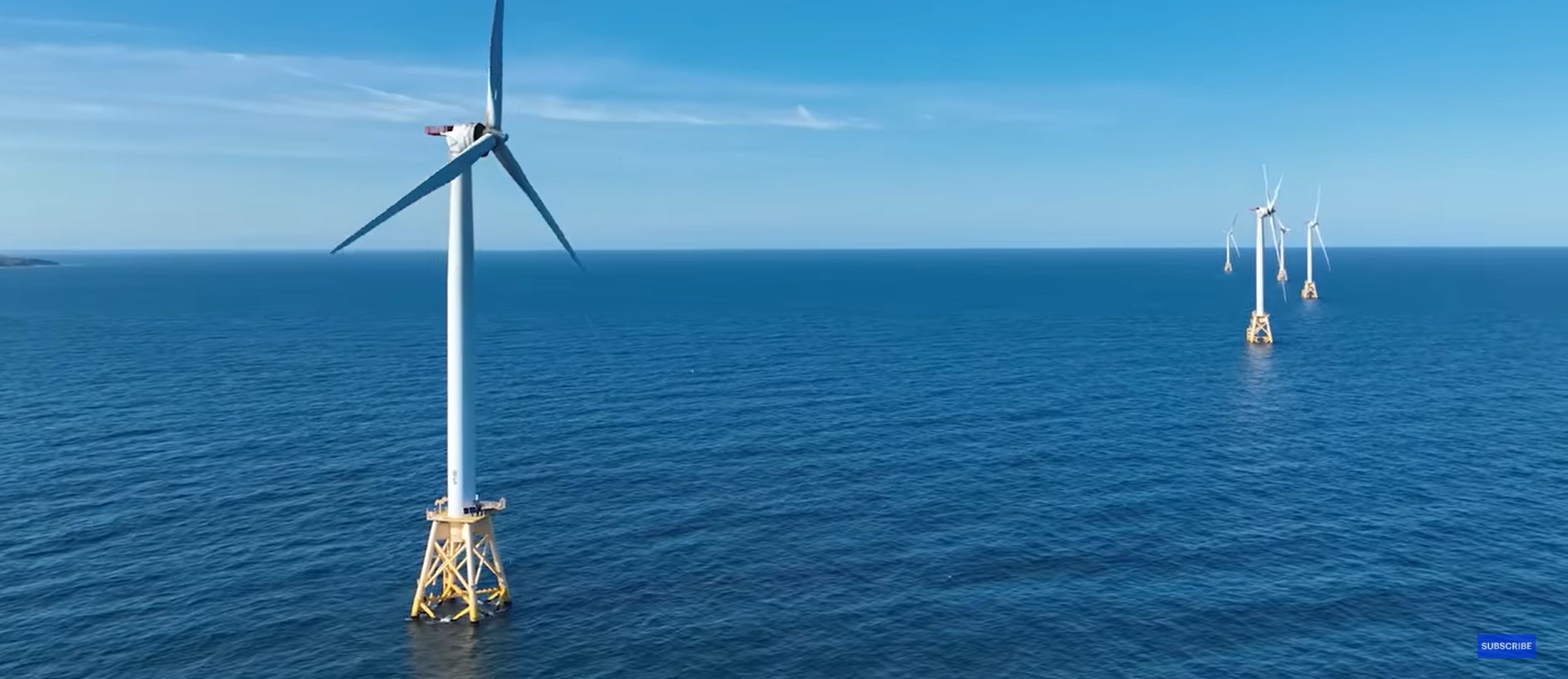
Offshore Wind Turbines (Screen Capture/PBS)
Some observers are now attempting to blame the ongoing collapse of the U.S. offshore wind industry on the sea change in federal policies being implemented during this second presidency of Donald Trump. But the reality is far more complicated than that, and the recent struggles of big Danish developer Orsted in its U.S. endeavors are a symptom of a larger, industry-wide problem.
Orsted made news again Monday when its stock fell precipitously following its receipt of a stop work order impacting its Revolution Wind project off the coast of Rhode Island issued by the Department of Interior. The order was issued to “address concerns related to the protection of national security interests of the United States and prevention of interference with reasonable uses of the exclusive economic zone, the high seas, and the territorial seas.” It was the second time in two weeks that Orsted suffered a major blow to its U.S. prospects.
“This is a huge hurdle with regards to raising capital,” an analyst from Sydbank told Reuters. “I’ve experienced a lot in my more than 20 years as a stock analyst, but this tops it all, I’m stunned.”
While Orsted has certainly been the big newsmaker in the U.S. offshore wind space in recent weeks, it is far from the only company experiencing such issues of project viability. There can be no doubt that the Trump policy reforms have had a significant impact, but Orsted’s U.S. problems go back for years.
In 2023, for example, right in the middle of the Biden administration’s push to rush offshore wind development before voters could have a say in the matter, Orsted announced it was abandoning two wind projects in offshore New Jersey.
In conjunction with its decision to walk away from the Ocean Wind 1 and 2 projects, the company was forced to sustain a write-down of over $4 billion. Orsted’s then-CEO, Mads Nipper, said the company was also setting aside another $1.55 billion to cover “potential contract cancellation fees not already covered by the impairments,” bringing the total bill to $5.55 billion.
In February 2024, BP, which had struggled to make a go of its offshore wind ventures for two decades, took a $1.1 billion write down related to its U.S. projects. It sold stakes in two such projects – Empire Wind 1 and 2, operated by Norwegian firm Equinor – and announced it had halted development plans for a third project off the coast of Massachusetts called Beacon Wind. Equinor continued to try to bring the Empire Wind project offshore New York to completion, but it had to book a $955 million hit in January, after the Interior Department issued a stop work order similar to the Orsted order.
BP’s fellow British major oil company, Shell, took a $1 billion charge in February after it abandoned its efforts to develop the Atlantic Shores project offshore New Jersey. That came two months after the company’s December 2024 announcement that it would no longer take the lead in developing new wind projects.
Critics blamed that all on Trump, but the current President can’t be blamed for Shell’s announcement in March 2024that it was abandoning its stake in the Ocean Winds project in offshore Massachusetts due to prevailing market conditions, including Biden-era inflation, supply chain issues, and simple non-viability of the project’s business plan.
Sure, Trump’s policies are having a big impact on U.S. offshore wind’s viability, but they certainly can’t be blamed for the industry’s ongoing struggles that go back into the heart of the Biden years.
Grid managers at ISO-New England responded to DOI’s stop work order with a plaintive statement complaining that the administration’s action poses a threat to the grid’s reliability during a time of rising demand. But President Trump can’t be blamed for the last two decades of rising reliability issues on the New England grid, as policymakers eager to signal green virtues have made a seemingly endless series of bad decisions, which author Meredith Angwin exposed in detail in her book, “Shorting the Grid.”
Donald Trump has become a powerful President to be sure. But in reality, the offshore wind business in America suffers from an array of sustainability issues that long pre-date his second presidency. All this tiresome blame shifting needs to stop.
David Blackmon is an energy writer and consultant based in Texas. He spent 40 years in the oil and gas business, where he specialized in public policy and communications.
The views and opinions expressed in this commentary are those of the author and do not reflect the official position of the Daily Caller News Foundation.
(Featured Image Media Credit: Screen Capture/PBS)
All content created by the Daily Caller News Foundation, an independent and nonpartisan newswire service, is available without charge to any legitimate news publisher that can provide a large audience. All republished articles must include our logo, our reporter’s byline and their DCNF affiliation. For any questions about our guidelines or partnering with us, please contact [email protected].