

Business
Trump Facing Warning Signs One Year In Amid ‘Growing Economic Pessimism,’ Analysts Say
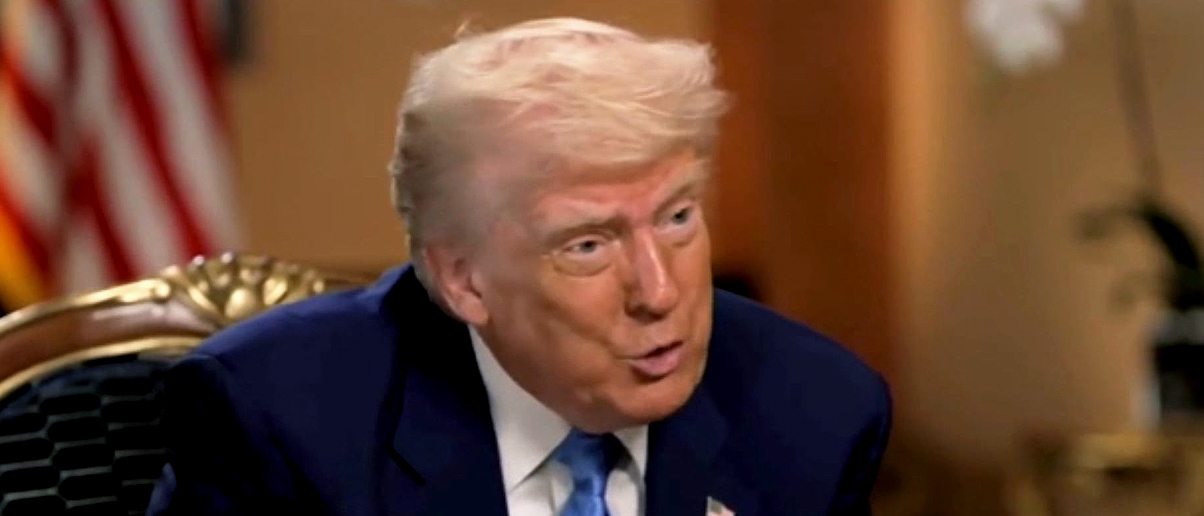
Screenshot/Fox News
President Donald Trump is facing warning signs a year into his second term as some recent polls have shown many Americans growing increasingly concerned about his economy.
Some recently released surveys have indicated many Americans are giving Trump’s handling of the economic matters low marks — such as a Wall Street Journal poll released on Jan. 16 which found that about half of respondents thought the U.S. economy had declined over the past year, compared with just 35% who thought it had improved. Economists told the Daily Caller News Foundation that problems such as policy uncertainty and inflation concerns are likely contributing to some Americans’ worsening economic outlook.
“A major underappreciated factor in the growing economic pessimism is ongoing policy uncertainty,” Peter C. Earle, Director of Economics and Economic Freedom, American Institute for Economic Research (AIER), told the DCNF. “Measures like the Economic Policy Uncertainty Index have remained elevated despite superficially strong headline growth, and that matters because uncertainty depresses confidence long before it shows up in GDP. When households and business owners perceive rules to be unstable or selectively enforced, they respond defensively – delaying big purchases, saving more, and expressing pessimism in surveys – even if aggregate output hasn’t yet rolled over.”
“For the past eighteen to twenty-four months, we’ve seen a pronounced divergence between ‘soft’ data and ‘hard’ data,” Earle continued. “GDP, employment, and corporate profits (hard data) still look resilient, but surveys and polls of households and small businesses (soft data) are signaling strain. Historically, that kind of gap doesn’t resolve by surveys ‘catching up’ to GDP or corporate performance; it usually resolves when hard data weakens. Poll respondents are reacting to lived price levels and financial conditions, not to quarterly aggregates.”
U.S. consumer confidence fell again in December 2025, with the Conference Board’s Consumer Confidence Index declining by 3.8 points to reach 89.1, compared to 92.9 the prior month. Many CEOs in the U.S. have listed “uncertainty” as their top economic concern heading into 2026, according to a Conference Board survey released on Jan. 15, which found that 43% of U.S. CEOs ranked uncertainty as the biggest threat compared to 29% of CEOs globally.
However, Trump has maintained that his economy is doing well, claiming during a Jan. 13 speech at the Detroit Economic Club that U.S. inflation has now been “defeated.”
“Under our administration, growth is exploding, productivity is soaring, investment is booming, incomes are rising, inflation is defeated, America is respected again like never before,” the president said. “And other than that, we’re not doing that well.”
White House Press Secretary Karoline Leavitt similarly said in a Jan. 13 statement that Trump has “defeated the inflation crisis” he “inherited” from former President Joe Biden’s administration.
“President Trump pledged to end Joe Biden’s economic disaster,” White House spokesman Kush Desai told the DCNF in a statement. “Much work remains, but cooled inflation, accelerating GDP growth, and trillions in investments pouring into the United States all prove that the Trump administration is delivering for the American people. President Trump’s economic agenda has a proven track record of success, and Americans can rest assured that as this agenda continues taking effect, the best is yet to come.”
Still, Earle claimed that the Trump White House’s recent attempts to paint a rosy picture about the U.S. economy may be contributing to somewhat gloomy economic sentiment among Americans.
“The administration’s repeated dismissal of affordability concerns is economically consequential,” Earle asserted. “Americans now have two presidents in a row who have lied about the level of inflation when they entered office. Inflation is a rate of price changes, but affordability is both a quantitative and qualitative level, and levels don’t reset just because inflation slows down. Prices are still rising, just far slower than they were in mid-2022. For many households, housing costs, insurance, energy, and credit costs remain structurally higher than the trajectory of their income, so official reassurances that the economy is ‘strong’ ring hollow and feed negative sentiment.”
“Economic confidence is inseparable from institutional credibility,” he added. “The lingering perception that politically sensitive issues – in particular, the Epstein matter – are being handled evasively contributes to a broader sense that official narratives are curated rather than candid. And once that belief takes hold, positive economic messaging loses traction whether or not the underlying data is technically sound.”
A CNN poll released on Jan. 16 found that 55% of voters thought Trump’s policies have worsened the U.S. economy, compared to just 32% who said they have improved economic conditions. Meanwhile, a 64% majority said the president has not done enough to try and bring down the price of everyday goods, the CNN survey shows.
The majority of voters, 58%, said the first year of Trump’s second term was “a failure,” according to the CNN poll.
Earle added that Trump recently grappling with “negative” economic polling “isn’t a mystery.”
“Elevated uncertainty, a soft data warning signal, unresolved affordability pressures, declining institutional trust, and a perceived reversal on foreign policy all point in the same direction: households feel economically vulnerable,” Earle explained. “Even if recession probabilities remain low, confidence can erode well before any formal downturn. Polls tend to capture that first.”
“It’s not surprising that many Americans have a negative outlook on the Trump economy,” Wayne Winegarden, senior fellow in economics at the Pacific Research Institute, told the DCNF. “His policies have been erratic and often counterproductive, which has caused employment growth to weaken. Throw in the continued adverse impacts from the inflationary surge and the economic environment is difficult for far too many families.”
“While several macroeconomic numbers have remained positive through the third quarter, the risk is that the broader economic environment will appreciably weaken throughout 2026,” Winegarden added. “Should these risks be realized, the outlook for Trump’s economy will deteriorate further.”
Employment growth cooled in December 2025, with nonfarm payrolls rising 50,000, per Bureau of Labor Statistics (BLS) data released Jan. 9. Meanwhile, the nation’s unemployment rate was little changed in December at 4.4%, compared to a revised 4.5% jobless rate in November 2025, the BLS reported.
The Consumer Price Index rose 0.3% on a seasonally adjusted basis in December 2025, the BLS reported on Jan. 13. Over the last 12 months, the all items index increased 2.7% before seasonal adjustment, according to the BLS.
Additionally, the American economy showed stronger-than-expected growth in the third quarter of 2025, with real gross domestic product increasing at an annual rate of 4.3%, according to an initial estimate from the U.S. Bureau of Economic Analysis.
All content created by the Daily Caller News Foundation, an independent and nonpartisan newswire service, is available without charge to any legitimate news publisher that can provide a large audience. All republished articles must include our logo, our reporter’s byline and their DCNF affiliation. For any questions about our guidelines or partnering with us, please contact [email protected].