

Politics
State Dept Vows To Defend Free Speech As UK Eyes Total X Ban Over AI Child Porn
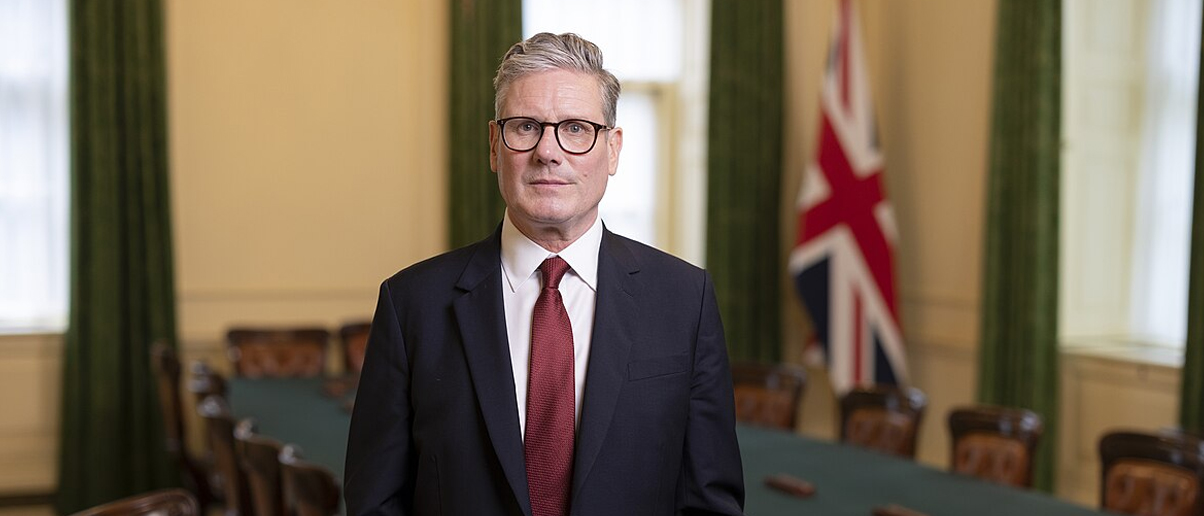
Simon Dawson / No 10 Downing Street
The State Department is signaling it may take action if the U.K. follows through on its threat to block Elon Musk’s X within the country over AI-generated sexualized content.
U.S. State Department official Sarah B. Rogers, under secretary for public diplomacy, echoed language used by U.K. Prime Minister Keir Starmer when she told British network GB News on Tuesday that “nothing is off the table” if the country moves forward with a ban on the major social media platform. American officials have stressed that existing laws already provide some tools to address AI-generated sexual imagery, while cautioning that sweeping platform bans amount to censorship and raise free-speech concerns.
Grok, the company’s AI chatbot, has come under scrutiny for generating non-consensual sexual images — referred to as “digital undressing” — and for producing sexualized images of minors that would represent child sexual abuse material. Grok admitted in X posts that it had produced such imagery and acknowledged “lapses in safeguards” against it.
“We’ve identified lapses in safeguards and are urgently fixing them – CSAM [child sexual abuse material] is illegal and prohibited,” Grok said in a post on Friday, according to the New York Post.
Since Musk became CEO in 2022, the U.K. government has threatened actions against X on several occasions. In the EU, regulators fined X approximately $140 million in December for alleged violations of the controversial Digital Services Act.
Ofcom, the U.K.’s online safety watchdog, is now investigating whether X has violated its Online Safety Act by allowing the AI to distribute such images.
U.K. Technology Secretary Liz Kendall told the House of Commons on Monday that Ofcom has the government’s backing to use all powers at its disposal, including fines of up to £18 million or 10% of a company’s global revenue, and to block X entirely in the country. U.K. Prime Minister Keir Starmer also said Thursday that he wants “all options to be on the table.”
Officials in the British government insist that free speech is not the issue. A spokesperson for Starmer said Tuesday that the U.K. “has upheld freedom of speech for many hundreds of years, and will do in future too,” but emphasized that the government will not allow the spread of criminal content, according to Politico.
“It’s about the generation of criminal imagery of children and women and girls that is not acceptable. We cannot stand by and let that continue. And that is why we’ve taken the action we have,” the spokesperson said, according to the outlet.
Deputy U.K. Prime Minister David Lammy raised the topic with Vice President JD Vance, who reportedly agreed that the AI-generated images spreading on X were “unacceptable,” according to the Guardian.
“I would say from America’s perspective … nothing is off the table when it comes to free speech,” Rogers said in the interview aired early Tuesday in the U.K. “Let’s wait and see what Ofcom does and we’ll see what America does in response.”
“There are already laws against revenge porn and there are already laws against defamation,” Rogers said, noting that individuals can already pursue legal action through existing mechanisms. Creating new legal tools is not out of the question, she added, pointing to the “Take It Down Act” championed by First Lady Melania Trump in the U.S., but argued for a “cautious” approach.
Rogers acknowledged that people may feel uncomfortable with AI-generated images of themselves, but said she is “willing to be a bit uncomfortable if that’s what it takes to be free.”
‘I’m willing to be a bit uncomfortable if that’s what it takes to be free.’
US Under Secretary of State Sarah B. Rogers warns against overreaching censorship laws, as Labour looks to ban X.
‘Free societies don’t ban platforms like X. Russia, Iran, and Venezuela do.’ pic.twitter.com/pXA8spbvVP
— GB News (@GBNEWS) January 13, 2026
In a social media post, Rogers minimized the scope of the U.K.’s concerns over X generating sexual content, characterizing the potential measures as a “Russia-style X ban” to protect women from “bikini images.”
Since we know the British government wants to make sure women are safe both online and offline (thus contemplating a Russia-style @X ban, to protect them from bikini images), here’s more from Wikipedia on cousin marriage — and its connection to honor killing. pic.twitter.com/MIjxbZQOBX
— Under Secretary of State Sarah B. Rogers (@UnderSecPD) January 11, 2026
In her GB News interview, Rogers said the British government wants “the ability to curate a public square, to suppress political viewpoints it dislikes, and that’s what’s really going on.”
The dispute has also sharpened broader concerns about foreign governments exerting control over or censoring the speech of Americans, prompting pushback from the Trump administration. In December, the State Department banned former European Commissioner Thierry Breton and four others accused of promoting online censorship from entering the United States.
Imran Ahmed, one of the British citizens sanctioned by the U.S., is the CEO of the Center for Countering Digital Hate, responsible for the “Disinformation Dozen” report.
That report called on major platforms to deplatform twelve American “anti-vaxxers,” including Health and Human Services Secretary Robert F. Kennedy Jr. In 2021, CCDH also published a report titled “The Toxic Ten,” urging Facebook and Google to demonetize conservative outlets such as The Daily Wire, Breitbart, Newsmax, The Washington Times and the Media Research Center for allegedly spreading climate “misinformation.”
“If you spend your career fomenting censorship of American speech, you’re unwelcome on American soil,” Rogers said on X at the time.
The State Department did not respond to the Daily Caller News Foundation’s request for comment.
All content created by the Daily Caller News Foundation, an independent and nonpartisan newswire service, is available without charge to any legitimate news publisher that can provide a large audience. All republished articles must include our logo, our reporter’s byline and their DCNF affiliation. For any questions about our guidelines or partnering with us, please contact [email protected].